📅2024.04.22 - 🇺🇸✏️영문 필사와 한 줄 메모
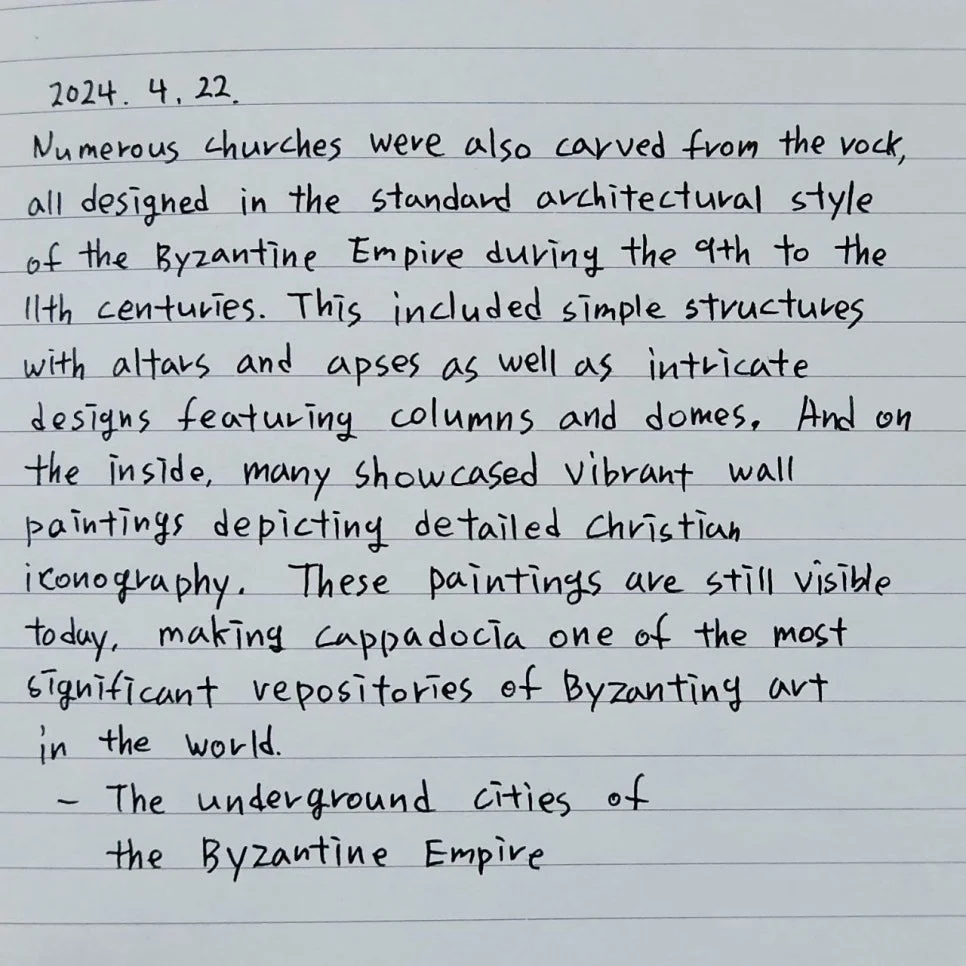
Numerous churches were also carved from the rock, all designed in the standard architectural styles of the Byzantine Empire during the 9th to the 11th centuries.
This included simple structures with altars and apses as well as intricate designs featuring columns and domes.
And on the inside, many showcased vibrant wall paintings depicting detailed Christian iconography.
These paintings are still visible today, making Cappadocia one of the most significant repositories of Byzantine art in the world.
— The underground cities of the Byzantine Empire
📚단어노트
Numerous : 다수의, 수많은
altars : 제단
apses : 후진
intricate : 얽힌, 복잡한, 난해한
vibrant : 활기찬, 생기넘치는
depicting : 그리다, 묘사하다
✔해석
많으나 교회들은 바위를 깎아서 지었는데, 모드 전형적인 비잔틴 제국 양식에 따라 9~11세기에 건설되었다.
제단과 후진(교회, 성당 건축에서 가장 깊숙히 위치해 있는 부분)이 있는 단순한 구조 뿐만 아니라,
기둥과 돔이 돋 보이는 복잡한 디자인도 있다.
내부에는 역동적인 벽화가 많이 보이는데 기독교 상징을 섬세하게 묘사했다.
현재도 벽화 보존이 잘 되어있어 카파도키아는 세계에서 가장 중요한 비잔틴 예술의 보고 이다.
📑나의 한 마디
https://www.youtube.com/watch?v=zs-zATBh_Ho
#하루15분영문필사모임 #영문필사 #문장수집 #영감노트 #영감수집 #LlifelogBlog #라이프로그블로그
#인생 #삶 #터키 #카파도키아
공유
댓글
아직 댓글이 없습니다. 첫 번째 댓글을 남겨보세요.